
Historical evidence · 1975
Two studies.
A rare insight.
The original reports show how the brown shrimp fishery off Rømø was studied in the autumn of 1975. We explain their contents in clear English. The original Danish scans have been preserved unchanged and can be opened below.
In brief
What do the reports tell us?
The earliest licence found by the association so far dates from 1968. It documents at least 58 years of licensed fishing. Fishing took place in the area earlier, including during its German affiliation, but the material currently available does not establish how far back it extends. Therefore, 1968 is the earliest documented licence, not necessarily the beginning of the fishery.
The reports document an established, specialised brown shrimp fishery operating from Havneby as early as 1975. The vessels, beam trawls, rollers beneath the gear and onboard practices had all been developed specifically for this fishery.
The studies also show how greatly catches could vary from one sampling day to another. The author therefore warned against treating isolated samples as a reliable picture of an entire year's fishing. He called for more systematic research and stressed that the fishers' practical knowledge was essential.
For Rømø Fiskeriforening, this is a central point: the fishers are skilled professionals with many years of experience. Their aim is a responsible fishery that can continue to provide a livelihood for their children and grandchildren. They therefore have a fundamental interest in safeguarding both the shrimp stock and the sea on which they depend.
An important point about the gear
1975 is not
2026
In 1975, the fishery did not use the selective trawls and sorting grids required under today's permits. The entire catch was brought aboard and sorted on the vessel.
The historical studies therefore provide important evidence about the fishery's history and the variation in catches, but they do not describe the effects of the more selective gear and working methods used today.
019 October 1975
The first study
The study was carried out by K. Albrechtsen. Ten vessels from Havneby were licensed to conduct experimental beam-trawl fishing and to cook the shrimp onboard. The report describes the vessels, fishing grounds, catches, sorting and processing.
What did the study find?
On that day, the catch contained many undersized shrimp and small fish. The report noted that large catches and delays before sorting could harm animals due to be returned to the sea. It identified shorter hauls, smaller catches, quicker water-supported release and improved sorting as ways to increase survival.
The report also stressed that results varied with location, season, depth, weather and current, and that the existing studies were too scattered to support firm general conclusions.
Open the original Danish scan ↗0212 November 1975
The follow-up a month later
The follow-up used a smaller beam trawl and compared daytime and night-time hauls at the same positions. The results differed markedly from those recorded in October.
Why does the difference matter?
In October, non-shrimp bycatch accounted for 48.15% of the catch. In November, the figure was 1.93%. This substantial difference shows why a single haul or sampling day cannot be assumed to represent the fishery as a whole.
The night-time hauls produced larger marketable shrimp and a higher yield per hour, while more small shrimp were sorted out. The report recommended further survival trials and continued collection of catch data.
Open the original Danish scan ↗The fishery was known and recorded
Two maps.
The same waters.
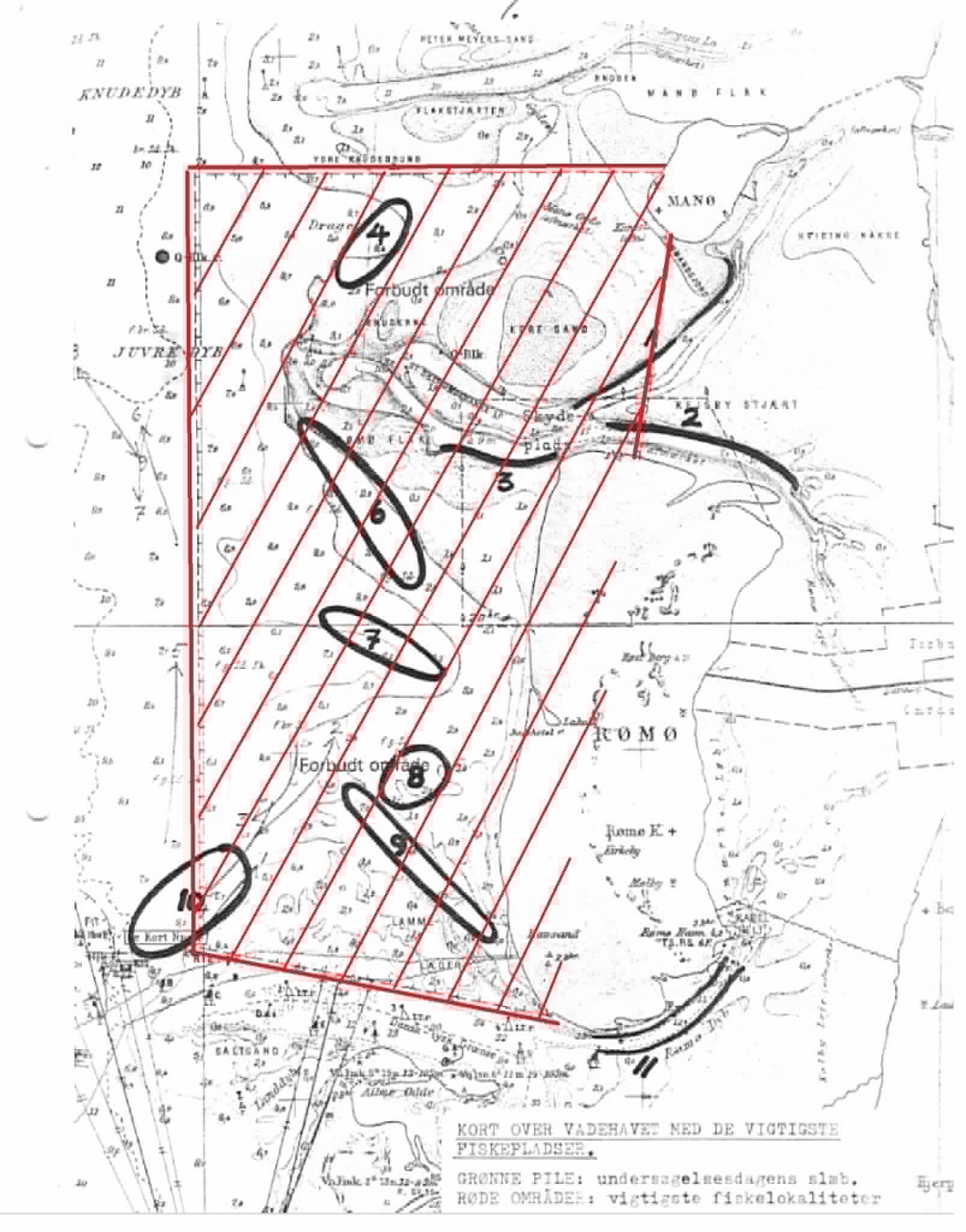
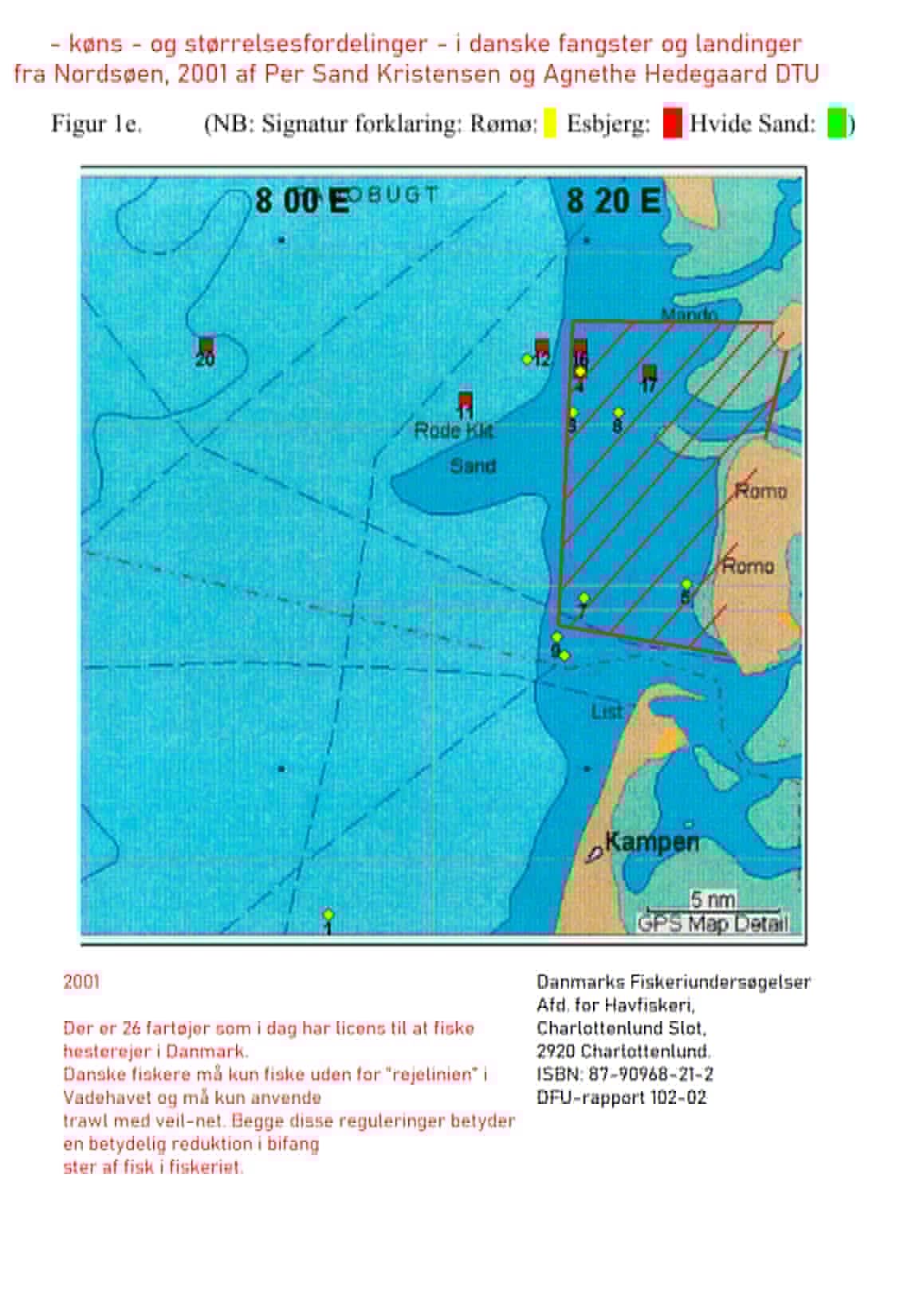
The historical chart shows fishing grounds west of Rømø and Mandø together with the prohibition area outlined in red. DTU material from 2001 shows recorded catches and landings from vessels licensed to fish for brown shrimp.
The maps support the conclusion that known and recorded fishing took place in and around the waters concerned, and that government fisheries biologists carried out studies with the fishers. Rømø Fiskeriforening believes the material shows that the authorities knew about the fishery over many years.
Important qualification: the maps do not, on their own, establish a legal exemption from the fishing prohibition, nor do they prove that mines were found at the marked locations.
How we present the sources
The original always comes first
The explanations on this page are intended to make the reports easier to understand. Figures and conclusions should always be checked against the original Danish scans.
The reports describe the fishery as it operated in 1975. They document its history, gear and contemporary research, but cannot on their own describe vessels and working practices in 2026.